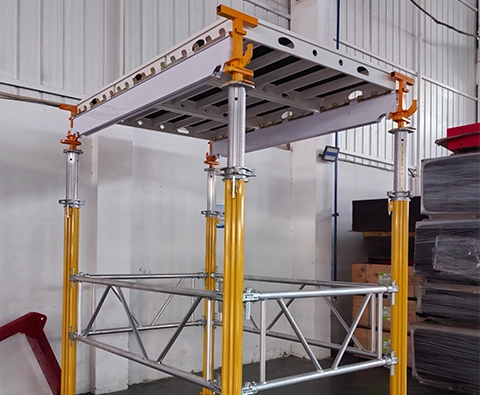
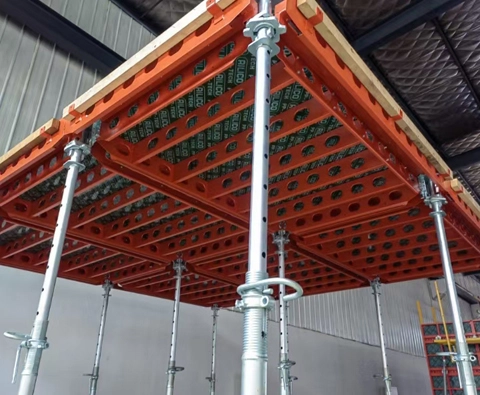
The selection of slab formwork not only affects the pouring speed but also impacts the appearance of the formed concrete, labor efficiency, material turnover times, and overall construction safety. For many construction projects, adopting the H20 timber beam system's timber formwork for slab is often chosen because it balances load-bearing capacity, adaptability, and lifecycle costs.
This article will introduce the common configurations, key components, advantages, and selection criteria of the H20 timber beam slab formwork, helping you better match the system with the slab geometry and construction rhythm.
The H20 timber beam slab formwork is a modular slab forming method, typically composed of H20 timber beams, plywood panels, adjustable steel props (or support systems), and accessories for leveling, edge form finishing, etc. It is suitable for projects requiring "standard floor repeated turnover" and where there are variations in slab thickness, irregular edges, and numerous openings.
Typical applications include:
Standard floor slabs of residential and commercial buildings
Large area slabs such as podium slabs and basement roofs
Projects with frequent slab openings and edge changes
Wood formwork for slab solutions emphasizing turnover and site adaptability
Due to the flexible adjustment of beam grid arrangements and minimal reliance on heavy equipment, this system is widely used in mid-to-high-rise building construction, especially for project teams aiming for a stable construction rhythm.
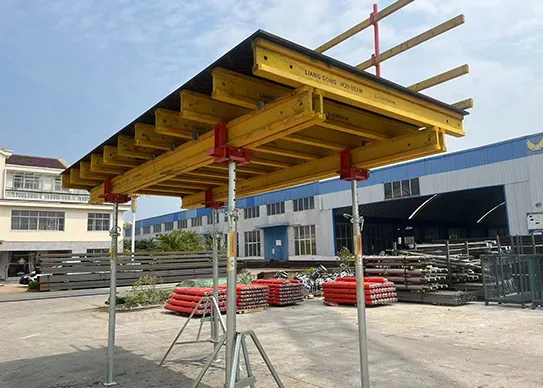
The typical timber beam formwork for slab construction system adopts a "beam grid + panel + support" layered force structure to reliably transfer the load of freshly poured concrete to the support system:
Primary beams: Arranged first to form the main load-bearing path
Secondary beams: Laid according to design direction to support panels
Plywood Panels: Serve as the forming surface in contact with concrete
Props/Shoring: Transfer loads to the ground and control elevation through leveling components
Common slab construction cycle (subject to project plan):
1) Measurement layout and elevation control
2) Beam grid arrangement
3) Panel laying
4) Rebar tying and embedded parts
5) Pouring and finishing
6) Formwork removal and reshoring/support retention (if needed)
This standardized process is one reason timber formwork for concrete slab systems are widely adopted: it maintains repeatable construction rhythm and can handle site changes and complex details.
Understanding the role of each component helps you evaluate system quality and long-term turnover performance.
H20 timber beams are the "skeleton" of the slab formwork beam grid. Their consistency and durability affect load distribution, deflection control, and turnover lifespan.
Plywood Panels directly determine the appearance of the concrete bottom surface and demolding efficiency. Selection is usually related to forming requirements, turnover times, and joint treatment methods.
Steel props/support systems determine overall stability and elevation control. Focus on adjustable range, locking reliability, and compatibility with U-heads/forkheads.
Accessories and detailed parts often determine on-site efficiency, such as tripods, leveling components, edge form solutions, and quick assembly/disassembly operation methods.
Properly configured H20 systems typically bring the following benefits:
Assembly efficiency and rhythm stability: Clear arrangement logic and replicable processes are common practical advantages of timber formwork for slab.
Forming quality is easier to control: With stable support and proper joint treatment, better control over bottom surface flatness and slab thickness consistency can be achieved, meeting quality management needs for timber formwork for concrete slab.
Turnover and cost are more controllable: Panels can be replaced after wear, and beams and supports can continue to be reused, helping to reduce overall costs.
Strong site adaptability: Beam grid wood formwork for slab is more capable of handling irregular edges, openings, and local thickening situations (provided detailed design and reinforcement schemes are reasonable).
It is recommended to prioritize the following information during the planning phase to quickly receive matching configuration suggestions:
Structure and Slab Parameters
Range of slab thickness and local thickening areas
Standard span dimensions and span direction
Floor height and support clearance restrictions
Edge beams/reverse beams/lowered slabs and other details
Elevator shafts, pipe shafts, stair openings, and MEP reservations
Goals and Construction Methods
Target construction rhythm, formwork removal, and reshoring strategies
Forming appearance and acceptance standards
Team operation habits and handling methods
Site and Logistics
Storage and transfer space, hoisting plans
Component weight and manual handling requirements
Packing and delivery order (more efficient by floor/zone)
For specifications and system configuration options, you can visit the H20 Timber Slab Formwork page for more details and submit slab structural drawings to receive more project-specific solution suggestions.