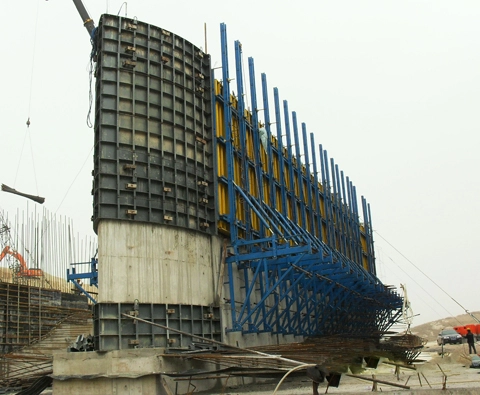
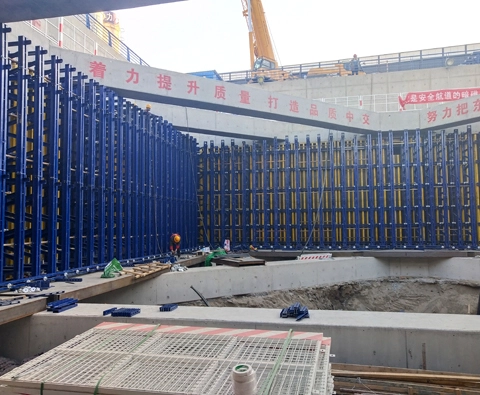
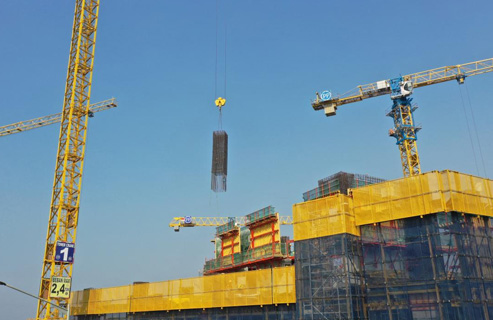
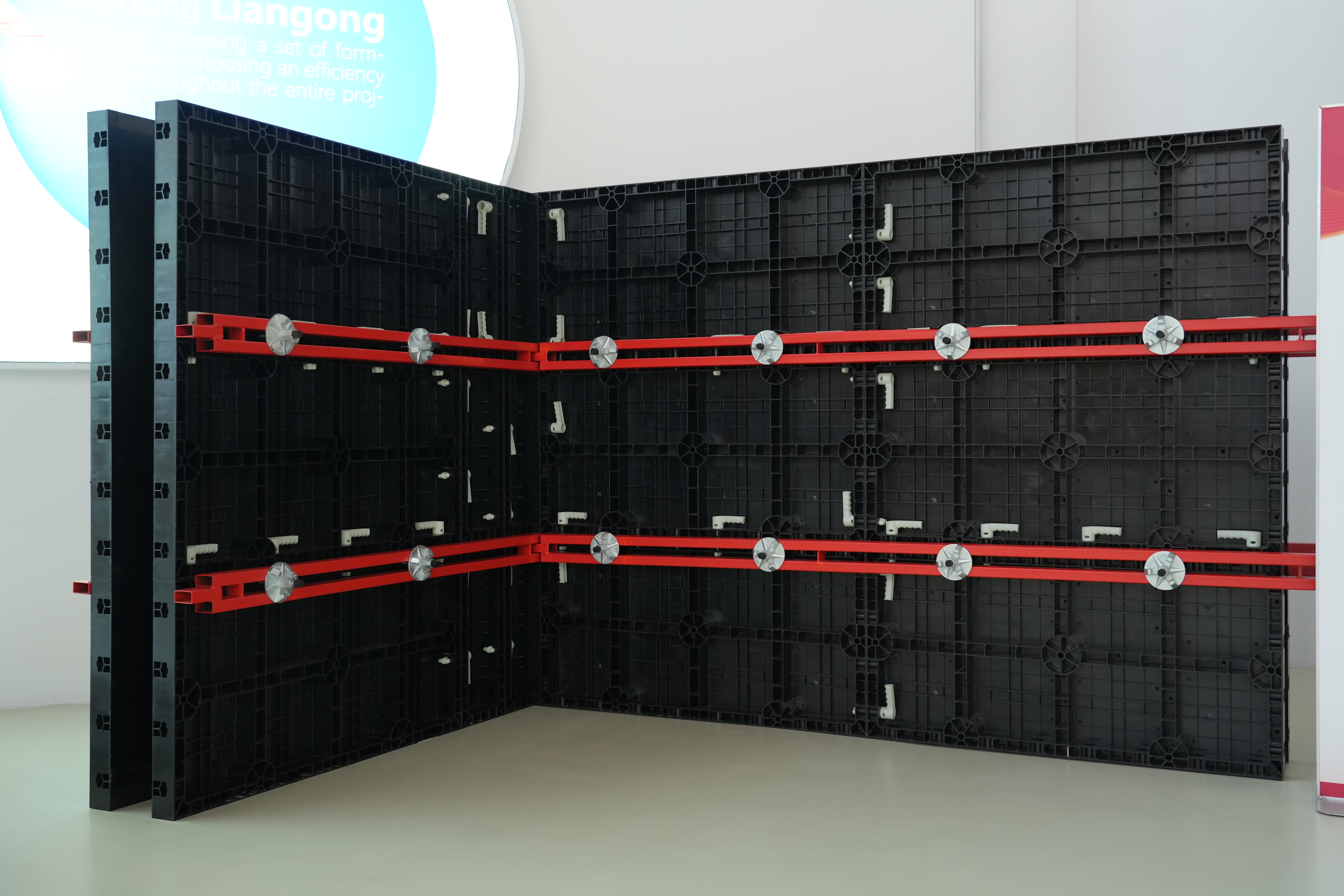
In contemporary construction engineering, the beam and slab formwork system plays a crucial role in the shaping process of reinforced concrete structures. These systems are widely used in residential buildings, commercial complexes, industrial facilities, and infrastructure projects, especially in projects requiring high precision, high stability, and high efficiency in completing horizontal load-bearing structures.
As the construction industry continues to evolve towards faster construction speeds, higher safety standards, and higher structural precision, advanced solutions provided by professional beam and slab formwork manufacturers are becoming increasingly important. By engineering system design, construction efficiency is improved while ensuring consistency in quality under complex construction environments.
This article will discuss the definition of beam and slab formwork, construction methods, whether beams and slabs should be poured simultaneously, and the application of modern systems in global engineering.
Beam and slab formwork is a temporary structural system used to support and shape freshly poured concrete beams and slabs until the concrete reaches sufficient strength and can support itself. Essentially, it is a mold system used to ensure the structural geometry remains stable during the pouring and curing process.
In reinforced concrete structures, beams and slabs form the main horizontal load-bearing system of a building. Therefore, the formwork system must meet various requirements, including dimensional accuracy, structural strength, and construction safety.
Modern beam and slab formwork systems are typically composed of timber I-beams, plywood panels, steel supports, and scaffolding systems. These components work together to achieve load transfer and structural stability. Among them, timber I-beams are widely used in large-span and repetitive construction scenarios due to their high strength and lightweight characteristics.
The beam and slab construction method is a common structural construction approach, where slabs are supported by beams, forming an integrated floor structure system. This method is widely adopted due to its structural reliability and adaptability.
In actual construction, vertical supports and scaffolding systems are first erected, then beam formworks are installed to form the structural outline of the beams, followed by laying slab formworks to form the horizontal construction surface. Subsequently, reinforcement is tied, and finally, concrete is poured and cured.
This construction method is highly flexible, able to adapt to different architectural design requirements. Through a modular system, the construction process is continuously optimized, reducing on-site complexity and improving construction efficiency.
In modern construction practice, beams and slabs are generally poured in a single continuous operation, i.e., monolithic pouring. This method enhances the integrity between beams and slabs, improves the overall load-bearing performance of the structure, and reduces the occurrence of construction joints, thus enhancing structural quality.
However, in some special cases, beams and slabs may be poured separately, such as when the structure is complex or when higher construction control requirements are present, necessitating phased execution to better control concrete quality and construction pace.
With the development of beam and slab formwork systems, monolithic pouring has become a mainstream trend, as it significantly improves construction efficiency and shortens project durations. Many beam and slab formwork suppliers' product designs are optimized for this construction method.
Modern beam and slab formwork systems are composed of various engineered components working together to achieve structural support and construction stability.
Timber I-beams are one of the core components of the system, featuring high strength and light weight, and can be reused in multiple projects. Plywood panels are typically fixed atop the timber beams to form the concrete pouring surface, ensuring structural surface flatness and dimensional precision.
Steel supports and scaffolding systems provide vertical support, safely transferring loads to the ground, ensuring stability throughout the construction process. Additionally, various connectors and fasteners are used for quick assembly and reliable locking, enhancing overall construction efficiency.
Modern beam and slab formwork systems have significant advantages over traditional construction methods.
Firstly, construction efficiency is improved. Modular design allows for quicker installation and dismantling, effectively reducing manual labor input and shortening project timelines.
Secondly, the structural load-bearing capacity is stronger. Engineered design maintains system stability during concrete pouring, reducing deformation and construction risks.
Additionally, these systems have good reusability, allowing them to be used in multiple projects, thus reducing long-term construction costs.
Flexibility is also an important feature, as the system can adapt to different beam arrangements and slab sizes, meeting the needs of complex building structures.
Finally, through precision panel systems, a higher quality concrete forming surface can be achieved, reducing post-construction finishing work.
Beam and slab formwork systems are widely applied in various construction scenarios.
In residential buildings, they are used for the construction of standard floor structures; in commercial buildings, they are suitable for large spans and complex structural designs; in industrial projects, they can withstand larger load demands; in bridge and infrastructure engineering, they are used to achieve high-precision concrete structure forming.
Due to their wide applicability, many construction companies rely on experienced beam and slab formwork suppliers to provide customized solutions to meet different project needs.
Choosing a reliable beam and slab formwork manufacturer is crucial to the success of a project. High-quality systems can ensure structural precision, reduce construction costs, and improve overall efficiency, while low-quality products may lead to structural deviations, construction delays, and even safety risks.
If your project requires reliable beam and slab formwork solutions, we welcome you to collaborate with Lianggong Formwork. You can call +86 18201051212 or contact us via email at sales01@lianggongform.com to obtain detailed product information, customized solutions, and professional technical consultation.
Choosing Lianggong beam and slab formwork means choosing an efficient, precise, and economical concrete beam and slab pouring method. Let Lianggong's advanced beam and slab formwork system assist your project in creating solid, high-quality horizontal structures.
Beam and slab formwork systems are an important part of modern reinforced concrete construction, providing stable shaping and support assurance for beams and slabs, ensuring structural safety and construction precision.
With advancements in engineering materials and modular design, modern systems provided by professional beam and slab formwork suppliers have significantly enhanced the efficiency, safety, and adaptability of construction projects.
Lianggong Formwork provides reliable, high-performance formwork systems to the global construction industry through advanced engineering solutions, meeting the ever-changing engineering demands.