In large vertical concrete structures like bridge piers, retaining walls, and dams, efficiency often depends on whether each "pouring-climbing" cycle can be stably repeated, reducing repeated assembly and disassembly and on-site coordination. Cantilever Climbing Formwork (also commonly referred to as Cantilever Formwork or Cantilever Climbing Formwork) centers on "a bracket anchored to the poured concrete + a working platform + formwork panels," making high-altitude work more platform-based and process more rhythmic, thus enhancing progress controllability and forming consistency.
The following sections outline the typical application logic of cantilever climbing formwork in engineering from the perspectives of definition, construction cycle, key bracket components, advantages, and selection considerations.
Cantilever Climbing Formwork is a climbing formwork solution where the bracket system is fixed to the poured concrete through anchors. The term "cantilever" refers to the bracket extending outward from the concrete wall surface/pier body, forming a stable working platform and formwork support space.
Cantilever Climbing Formwork is commonly applied in:
Vertical structures like bridge piers, bridge towers, and cable towers
Retaining walls and continuous high walls
Dams and hydraulic/gravity structures
Segmental pouring structures like exterior basement walls
When a project requires strong load-bearing capacity, stable platform operations, and repetitive pouring rhythm, cantilever climbing formwork often facilitates easier construction organization and quality control.
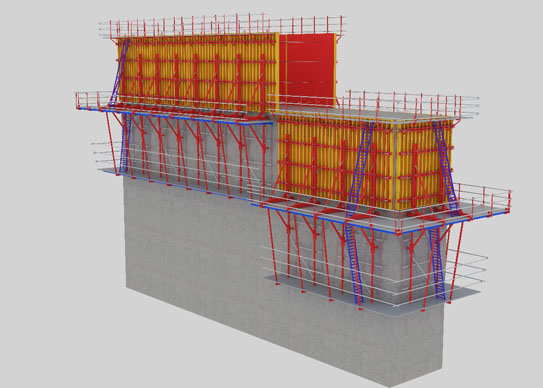
Different projects may adjust details based on strength requirements and construction methods, but a typical Cantilever Climbing Formwork cycle is roughly as follows:
Measurement, marking, and anchor point confirmation
Confirm anchor point positions based on the segmental pouring plan. The arrangement of anchor points determines stability and line control effect.
Install/position the bracket and platform
The bracket and platform connect to the anchor system, forming a safe operating surface.
Install the formwork and correct the verticality and alignment
After panel fixation, adjust and reinforce to ensure dimensions and verticality meet requirements and minimize cumulative deviations after multiple turnovers.
Pouring and finishing
A stable platform and support system facilitate pouring organization and finishing quality control.
Form removal and elevation to the next segment after conditions are met
After reaching the strength/form removal conditions per the construction plan, remove the formwork and then elevate/relocate the system to the next pouring segment.
This "fixed rhythm" cycle helps reduce rework probability, improve plan fulfillment rate, and make the construction of large vertical structures more predictable.
The Cantilever Climbing Bracket is the crucial load-bearing component of the system: it reliably transfers the loads of platforms, personnel, materials, and formwork to the concrete structure through the anchor system. The rationality of bracket design directly affects pouring stability, adjustment efficiency, and safety boundaries.
When evaluating cantilever climbing brackets, it is recommended to focus on:
Load path and overall stiffness: stability performance during pouring and repositioning stages
Platform layout and working space: whether rebar tying, inspection, and pouring are smooth
Adjustability: the ability for quick on-site correction of verticality and alignment
Integrated safety system: whether railings, kick plates, passages, edge protection are systemically designed
From an engineering perspective, whether the bracket system is "easy to use" often determines on-site efficiency more than just the formwork panels alone.
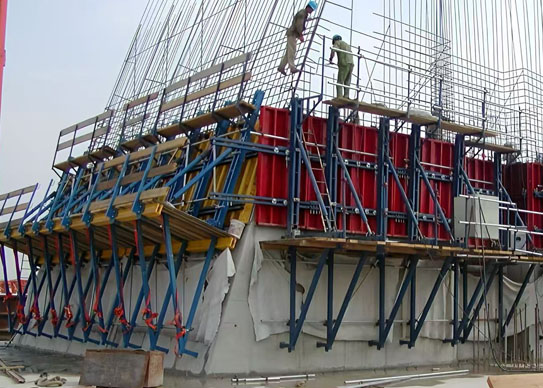
Mature Cantilever Formwork typically provides more stable on-site benefits in the following areas:
Efficiency
More standardized pouring-form removal-climbing rhythm
Reduced time consumption for repeated assembly and temporary reinforcement
Labor and acceptance windows are easier to arrange
Safety
Platform-based operations reduce edge exposure
Fixed operation channels and more controlled operations
Quality
Stable support and clear correction mechanisms facilitate controlling flatness and verticality
Easier to maintain forming consistency under repeated turnovers
When selecting suitable Cantilever Climbing Formwork, it is recommended to first organize the key parameters to facilitate the supplier's quick completion of scheme configuration and drawing deepening:
Selection checklist
Structure type and height (bridge pier/wall/dam, etc.)
Single pouring segment height and segmentation plan
Geometric features like wall thickness changes, curves/lines, offsets, etc.
List of holes and embedded parts, congested rebar areas
Platform load requirements and on-site logistics organization method
If the project includes both wall and slab construction, you can also coordinate with related systems like cantilever slab formwork in advance to reduce conflicts in on-site hoisting and material turnover.
A more efficient advancement method is to directly connect with manufacturers with engineering deepening capabilities: provide configuration suggestions, drawings, and delivery plans based on structural drawings and construction rhythm. You can view product information and submit requirements on the cantilever climbing formwork page.