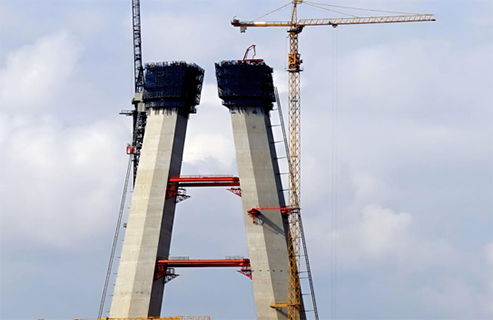
The construction of bridge piers and towers requires more than just standard formwork panels. High bridge piers, bridge towers, cable-stayed bridge towers, and complex concrete structures require a formwork system that can support safe vertical casting, stable climbing, precise positioning, and repeatable construction cycles. For international contractors and infrastructure procurement teams, the choice of supplier directly affects project safety, schedule control, concrete quality, and overall construction costs.
A professional supplier should not only provide products but also support engineering drawing review, Auto-CAD planning, system layout, production control, packaging, delivery, and on-site training. This is especially important when procuring china pier bridge climbing formwork for river, mountainous, urban traffic corridors, or remote infrastructure projects.
Lianggong Formwork, established in 2010, is a manufacturer of formwork and scaffolding systems for the construction of bridges, high-rise buildings, dams, tunnels, and infrastructure. Its product range includes hydraulic self-climbing formwork, cantilever climbing formwork, H20 timber beam systems, custom steel formwork, scaffolding, and other construction solutions.
Bridge piers and towers are vertical concrete structures that are typically tall and require strict dimensional accuracy and load-bearing requirements. Unlike ordinary wall or column construction, bridge pier construction often involves large cross-sections, dense reinforcement, high concrete pressure, wind load effects, limited working space, and repetitive lifting operations.
Under these conditions, climbing formwork can gradually rise with the concrete structure, moving the working platform and formwork system upwards. This allows contractors to cast bridge piers or towers in controlled construction segments and reuse the same system in multiple cycles.
A well-designed climbing formwork system can help contractors improve several key construction aspects. It provides workers with a stable working platform, supports precise concrete forming, reduces repetitive disassembly work, and enhances the safety of high-altitude operations. It also helps maintain a predictable casting rhythm, which is crucial for large bridge projects with tight schedules.
For bridge towers and cable towers, engineering precision is particularly important. Even small deviations can accumulate gradually after multiple casting cycles. Therefore, formwork suppliers must understand vertical construction logic, climbing sequences, anchoring details, concrete pressure, and on-site access conditions.
Not all formwork suppliers are suitable for complex bridge pier and tower construction. A reliable supplier should have experience in high vertical structure projects and be able to recommend appropriate systems based on bridge type, pier height, cross-section geometry, casting cycles, and site equipment conditions.
For overseas buyers, suppliers should also be familiar with export packaging, sea transportation, loading plans, documentation, and communication during the production process. Bridge formwork components are often large, heavy, and project-specific. If the packaging is unreasonable or the components are not clearly labeled, installation may be delayed upon arrival.
When evaluating suppliers, contractors should focus on three key capabilities.
First, suppliers should provide system selection support. Depending on project conditions, the suitable solution may be hydraulic self-climbing formwork, cantilever climbing formwork, custom steel formwork, timber beam formwork, or a combination of multiple systems.
Second, suppliers should offer technical planning capabilities. This includes drawing review, Auto-CAD layout, component configuration, anchoring positions, platform arrangement, and assembly guidance.
Third, suppliers should provide comprehensive project support. This includes production schedule updates, quality control communication, packaging recommendations, loading information, and technical support during the on-site application phase.
Suppliers with these capabilities can help contractors reduce uncertainties before shipment and enhance execution efficiency once the system arrives on site.
The planning of bridge climbing formwork should start from structural drawings. Before production, suppliers need to understand the geometry, cross-section changes, casting height, concrete pressure, reinforcement layout, platform requirements, and lifting methods of the pier or tower.
Key technical information may include:
Height and cross-sectional dimensions of the pier or tower
Straight, variable cross-section, hollow, or irregular concrete shapes
Planned casting height for each cycle
Concrete pressure and casting speed
Anchoring positions and embedded parts
Working platform levels and access requirements
Availability of tower cranes or hydraulic climbing needs
Site constraints, transport routes, and storage space
Lianggong's sales department works closely with the R&D and technical teams to provide customized consultation for projects. Based on customer structural drawings, the team can offer formwork recommendations, quality and price consultation, delivery advice, and packaging solutions.
For custom projects, Lianggong technicians can design and modify Auto-CAD drawings according to customer requirements. From initial drawing creation to quote confirmation, this process helps buyers understand the system solution before production and allows the contractor's engineering and on-site teams to identify potential conflicts in advance.
Good engineering planning can reduce the risk of component mismatches, unclear installation sequences, and on-site modifications. For complex bridge projects, early coordination is often more valuable than simply comparing product prices.
Different bridge structures require different climbing formwork solutions. A professional supplier should match the system to the project rather than recommending the same standard product for all conditions.
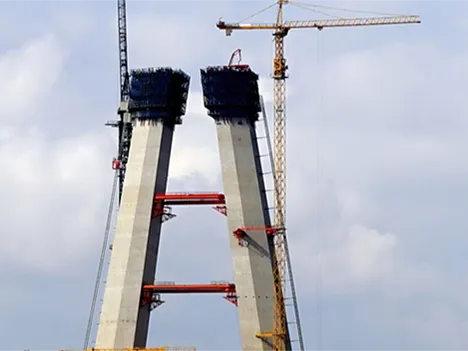
Hydraulic self-climbing formwork is suitable for high bridge towers, cable towers, and high bridge piers, especially for projects that wish to reduce reliance on tower cranes or achieve crane-free climbing. This system moves the main frame and climbing rails through its own hydraulic lifting mechanism, helping to enhance climbing stability, reduce dependency on tower cranes, and support more efficient vertical construction cycles.
Cantilever climbing formwork is also a practical solution for piers and vertical concrete structures. It can provide a stable working platform and controlled casting conditions. In some projects, this system can be moved by tower cranes or become a more economical climbing option when the construction sequence and site equipment conditions are suitable.
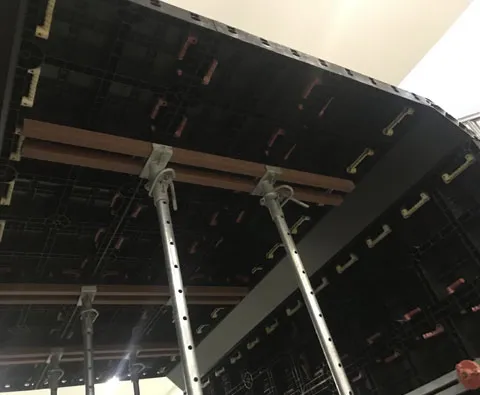
When piers have special shapes, curves, variable cross-sections, or project-specific concrete profiles, custom steel formwork is very useful. Steel components can be designed according to the required geometry and reuse plans.
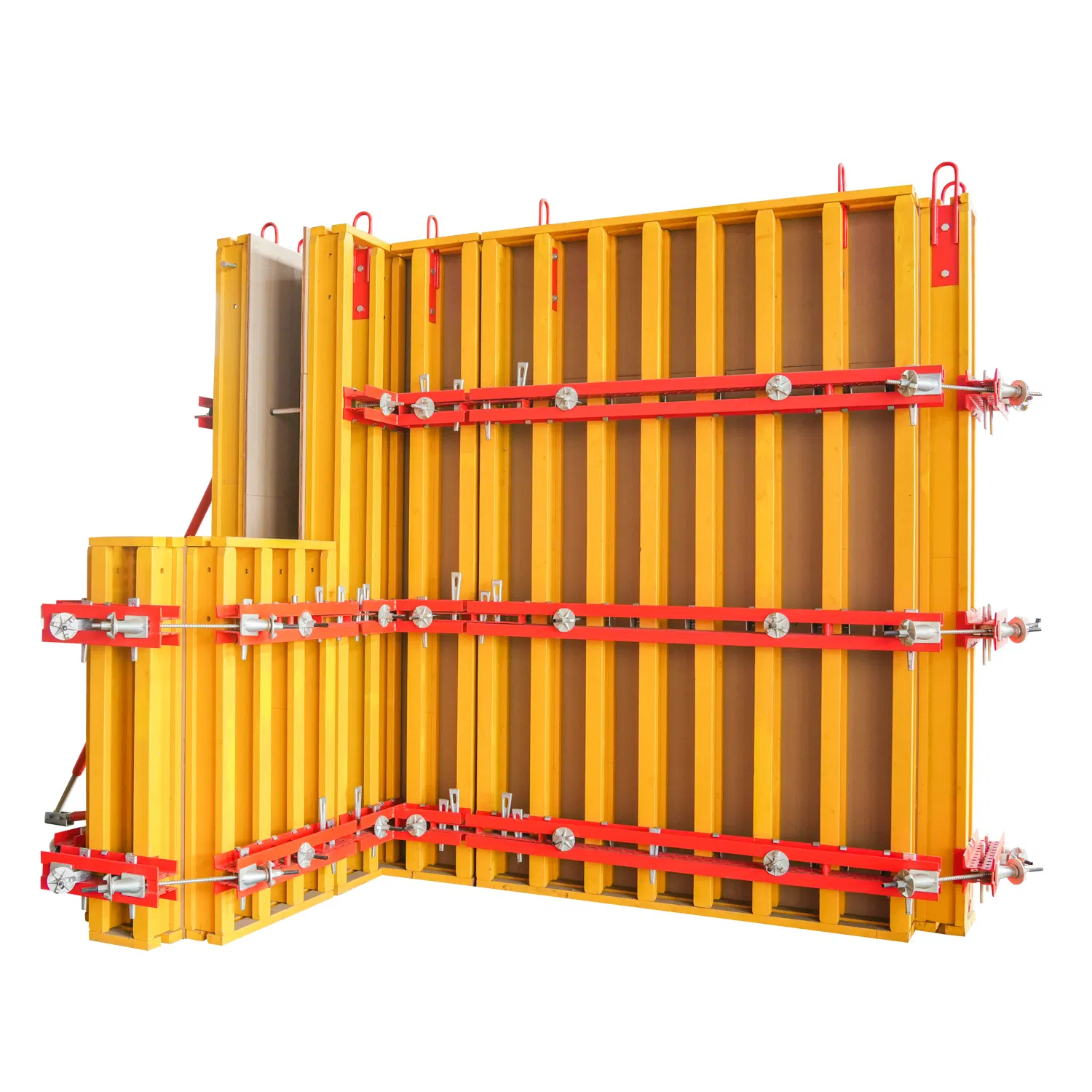
In many bridge projects, the final solution may combine multiple systems. For example, the main structure of a high cable tower may use hydraulic self-climbing formwork, while special areas use custom steel formwork. Timber beam formwork or modular systems can also be used for auxiliary concrete components.
This is also why the product system is important. Suppliers with multiple formwork systems can provide a more balanced solution for complex bridge construction rather than forcing the project into a single limited system.
For overseas bridge projects, delivery planning is part of the technical solution itself. Even if the formwork design is correct, improper logistics arrangements may cause delays, component damage, or installation chaos.
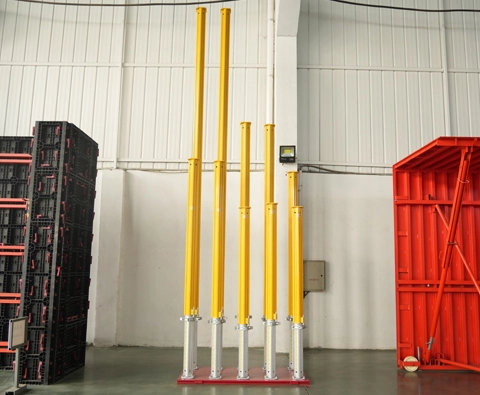
A reliable supplier should provide a clear packaging plan based on component size, weight, material type, and transportation method. Long-sized steel components, panels, brackets, platforms, anchors, tie rods, hydraulic components, and accessories should all be reasonably packaged and clearly labeled. This makes unloading, sorting, and on-site assembly more efficient.
Lianggong follows marine standards and INCOTERMS 2020 to support safe and efficient export delivery. Products are packaged according to size and weight, and custom packaging solutions are designed for different materials and systems.
Before delivery, Lianggong can provide workshop drawings and assembly drawings. These documents help the construction team understand the system layout, connection sequence, and installation methods before on-site operations begin. A dedicated order follow-up team will also continuously update customers on production progress, quality inspection processes, packaging methods, and loading processes.
For teams using the system for the first time or wishing to enhance on-site performance, Lianggong can arrange on-site technical experts to provide support, training, and inspections. This is important for bridge projects because the safe use of formwork depends not only on product quality but also on correct assembly, anchoring, climbing, and inspection processes.
Before confirming an order, bridge contractors and procurement teams can use the following practical checklist to compare suppliers.
| Evaluation Item | Content the Buyer Should Check | Why It's Important |
|---|---|---|
| Bridge Project Experience | Experience with bridge piers, cable towers, bridge towers, and vertical concrete structures | Helps confirm the supplier understands bridge construction risks |
| System Selection | Hydraulic self-climbing, cantilever climbing, custom steel formwork, timber beam, or modular systems | Better matches different bridge structures |
| Engineering Support | Drawing review, Auto-CAD design, layout planning, anchoring details, platform arrangement | Reduces design errors before production |
| Load and Climbing Safety | Concrete pressure, platform load, climbing method, anchoring system | Supports safer vertical construction |
| Production Quality | Material selection, welding, dimensional accuracy, surface treatment, trial assembly inspection | Reduces installation and turnover use issues |
| Export Packaging | Component identification, packaging by size and weight, loading planning | Enhances efficiency of overseas delivery and on-site sorting |
| Technical Documents | Workshop drawings, assembly drawings, packing list, installation guidance | Helps on-site teams correctly install and use the system |
| On-site Support | Training, inspection, troubleshooting, and application guidance | Reduces risks during the first use cycle |
Price is important, but bridge contractors should avoid choosing suppliers based solely on the lowest quote. If a low-cost system leads to slow installation, safety hazards, poor concrete surface quality, missing components, or repeated on-site modifications, the total cost may ultimately be higher.
Bridge pier and tower climbing formwork is a technical construction system. It must match structural forms, casting sequences, climbing methods, on-site access conditions, labor conditions, logistics planning, and safety requirements.
For complex bridge projects, a suitable supplier should provide engineering design, reasonable system selection, manufacturing control, export packaging, technical documents, and on-site training. This full-cycle support helps contractors reduce project uncertainties and complete vertical concrete structure construction more safely and efficiently.
Lianggong Formwork can provide hydraulic self-climbing formwork, cantilever climbing formwork, custom steel formwork, timber beam systems, scaffolding, and project-specific technical support for bridge and infrastructure construction. For upcoming pier, cable tower, cable-stayed bridge, arch bridge, or bridge tower projects, you can contact us to submit drawings and construction requirements and further discuss suitable climbing formwork solutions.