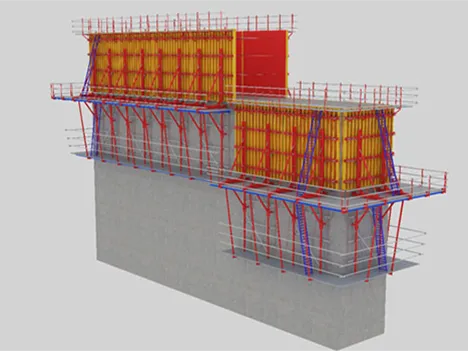
Construction of high-rise core tube walls typically faces three major pressures: tight schedule, stable quality requirements, and limited site safety and tower crane resources. Hydraulic Auto-Climbing Formwork, also commonly referred to as Auto Climbing Formwork, delivers its core value by achieving "fixed rhythm repetitive production" through hydraulic self-climbing, reducing dependence on repeated lifting by tower cranes, making core tube construction more controllable and continuous.
This article will systematically explain how the Automatic Climbing Formwork System helps projects improve efficiency and predictability, covering its definition, workflow, system components, key selection points, and supplier support.
Automatic Climbing Formwork System is an integrated solution composed of form panels, climbing brackets/steel structure, work platforms, protection systems, and climbing power systems. Unlike relying on the tower crane for overall lifting each time, it usually uses hydraulic devices to "self-climb" along pre-embedded anchor points, thus incorporating climbing actions into the standard construction cycle.
Common applications include:
Core tubes of high-rise buildings (elevator shafts, stairwells)
Shear wall systems
Main towers/piers of bridges
Other vertically repetitive concrete structures
Compared to "tower crane lifting type climbing formwork", Automatic Climbing Formwork has the advantage of stronger rhythm and planning: climbing acts more like "a part of the production line" rather than an "ad hoc task waiting for the tower crane".
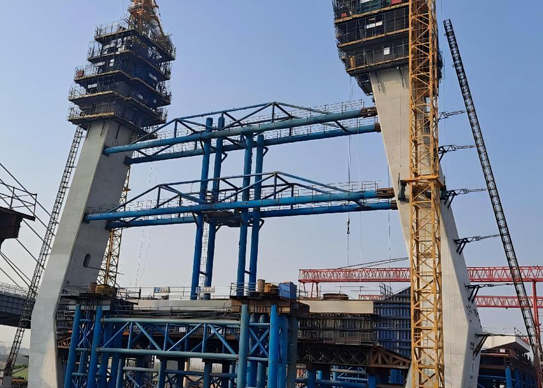
A typical Hydraulic Self Climbing Formwork cycle usually includes the following steps (different projects may adjust according to strength requirements and construction methods):
Reinforcement and embedded parts construction
Including rebar tying, sleeves, embedded plates, hole reservations, etc. Whether the system platform and operation space are reasonable directly affects work efficiency and inspection convenience.
Molding, correction, and reinforcement
The formwork closes and is position corrected. A stable Hydraulic Formwork system helps control linearity and cumulative error.
Pouring and vibrating
The stability of the platform, panel stiffness, and connection reliability affect the forming effect and appearance consistency.
Curing and reaching climbing conditions
When to climb depends on concrete strength and construction plan requirements. The core goal is to maintain rhythm without sacrificing safety and quality.
Formwork removal/detachment
Controlled detachment according to the system design reduces the risk of corner damage.
Hydraulic synchronous climbing to the next anchor point
The hydraulic device synchronously elevates the entire system to the next anchor position. For projects with tight tower crane resources, this "climbing independence" is often a key factor in improving efficiency.
When the cycle becomes replicable and controllable, the construction schedule becomes more stable, labor configuration clearer, and site coordination costs are significantly reduced.
A mature Hydraulic Auto Climbing Formwork is not just "climbing fast," but more importantly, its comprehensive control ability over progress, safety, and quality.
Auto Climbing Formwork separates "formwork moving/climbing" from tower crane tasks, allowing the tower crane to serve more for necessary lifting tasks like reinforcement and materials, making the overall production rhythm more controllable.
Systems are usually equipped with multi-layer work platforms, railings, and protection systems, controlling the climbing process and reducing safety risks brought by frequent disassembly and unplanned lifting.
Repetitive construction relies more on system stability. When panel connections, tensioning, and correction methods are reasonable, wall verticality, flatness, and appearance consistency are easier to control.
Automatic Climbing Formwork integrates formwork, platforms, and climbing into standard processes, facilitating the formation of a fixed "inspection—pouring—climbing" rhythm, improving plan fulfillment rates.
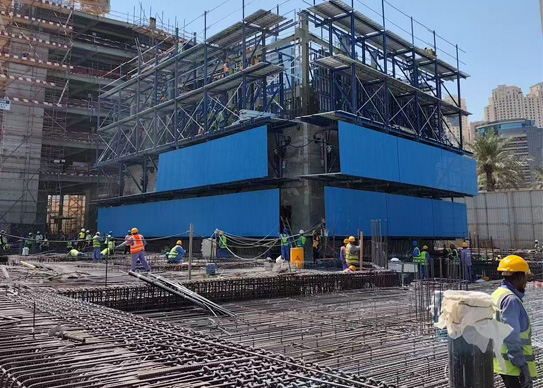
When evaluating any climbing formwork scheme, it is recommended to judge its suitability and stability from the "components and load paths".
The form of panels and the degree of modularization determine adaptability: changes in wall thickness, changes in the core tube plane, and the presence of holes all affect panel disassembly efficiency and turnover performance.
Many schemes fall under the category of Self Climbing Steel Formwork systems, where brackets/back braces/frames bear the main load transmission during pouring and climbing, determining the overall rigidity, platform bearing, and long-term cycle stability of the system.
Climbing power usually comes from hydraulic devices. Some configurations can also be described as **Hydraulic Cylinder Steel Formwork**: achieving synchronized, controlled overall lifting by cooperating oil cylinders/jacks with steel structures and anchor components. Key focus points include:
Synchronous control method and safety lock logic
Ease of maintenance and inspection
On-site fault response and spare parts support
High-rise core tubes often integrate protection screens and multi-layer platforms to enhance fall protection, weather resistance, and site cleanliness.
Anchor point settings and climbing path design need to match structural conditions, especially in areas dense with holes and crowded with reinforcement, requiring advance planning.
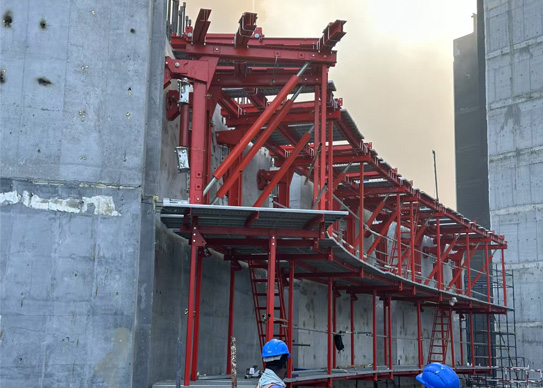
The key to choosing Auto Climbing Formwork is not "choosing a generic model," but rather clarifying the project input parameters to match system design with site rhythm.
Standard floor height and total cycle count
Wall thickness range and variations
Whether the core tube plane has deviations, zigzag, arcs, or irregular changes
Elevator door openings, air shafts, equipment openings, etc.
Embedded steel plates, sleeves, curtain wall connection points
Coordination requirements with M&E/steel structure embeds
Target rhythm and personnel configuration
Appearance quality grade requirements
Allowed deviations and acceptance/inspection processes
Whether the platform needs temporary material storage
Reinforcement congestion and operation space
Tower crane resources and site lifting priorities
It is recommended for the supplier to provide:
System layout drawings, processing drawings, assembly drawings
Suggestions for climbing process and construction plan coordination
International transport packaging and shipping planning
Installation, commissioning, and training guidance
When these aspects are in place, the Automatic Climbing Formwork System can truly become a "stable production tool," rather than a site difficulty requiring repeated coordination.
For many projects, "system hardware" is only part of the value, with the other part coming from solution consulting, detailed design, drawing response, production quality inspection, and on-site support. Direct cooperation with manufacturers is often more conducive to customization, version iteration, and delivery coordination, especially suitable for projects with more changes in the core tube plane or high schedule requirements.
To promote faster selection and solution integration, it is recommended to prepare structural drawings and key parameters (floor height, wall thickness, core tube plane changes, hole list, etc.) in advance so the engineering team can quickly provide system configuration suggestions and climbing solutions. You can also learn about products and submit requirements through the Hydraulic Auto-Climbing Formwork System page.
Tower crane lifting type usually requires repeated overall lifting and positioning by the tower crane, easily conflicting with other on-site lifting tasks; Auto Climbing Formwork relies on its own climbing mechanism (mostly hydraulic) for ascending, which is more independent and more planable.
Yes, but the system needs to be engineered for the structure, such as modular panels, adjustable brackets, and reasonable anchor point arrangements to cope with deviations, holes, and plane changes.
Hydraulic systems support synchronized, controlled lifting. With locking and monitoring mechanisms, uncertainties during the climbing process can be reduced, making climbing actions smoother and easier to incorporate into construction plan management.
Usually includes structural drawings, wall thickness, floor height, core tube plane changes, hole tables, platform load requirements, and target construction rhythms to determine panel sizes, bracket configurations, and anchor point positions.
In most cases, yes. Protection screens and multi-layer platforms are common configurations for high-rise core tubes, enhancing safety, traffic efficiency, and site cleanliness.