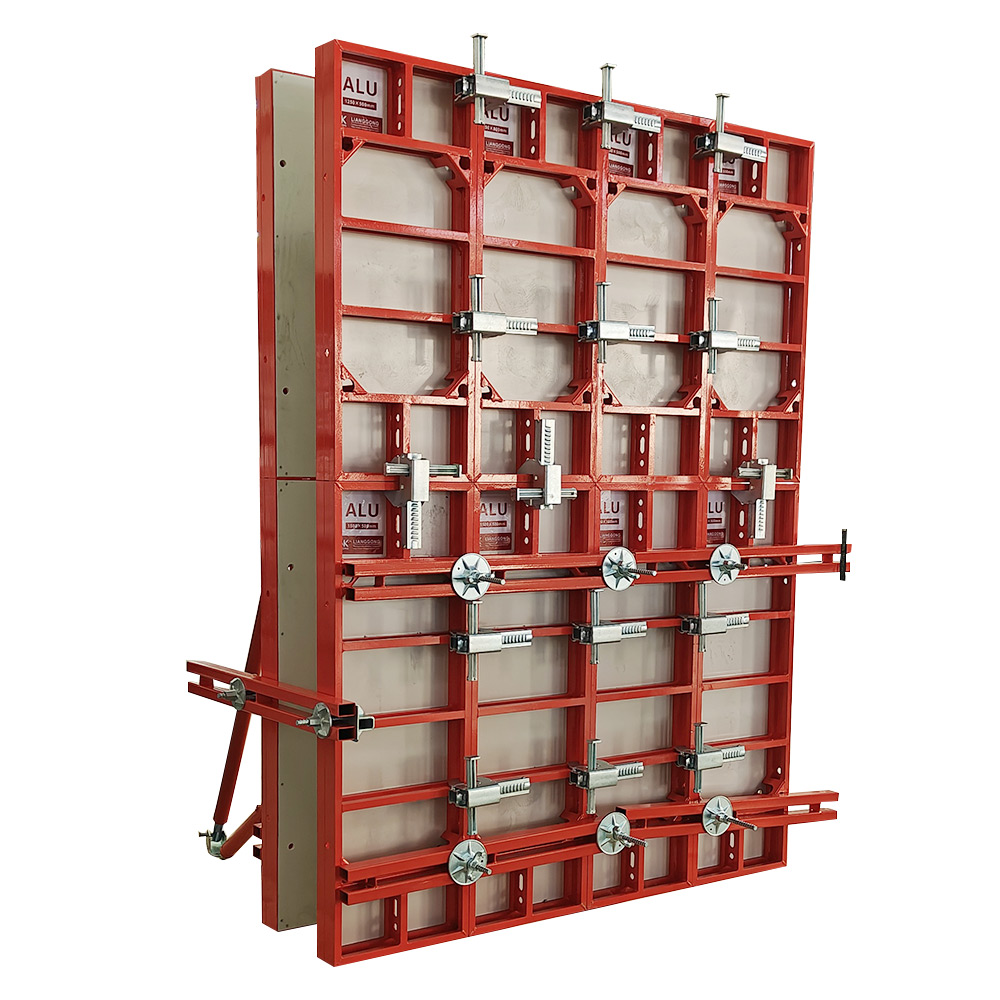
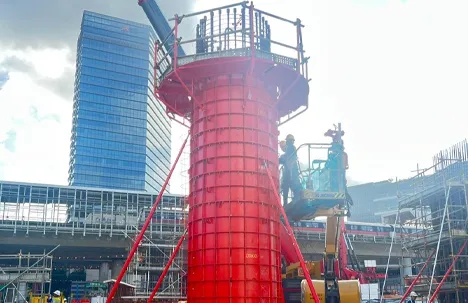
In the context of the rapid development of modern construction engineering, customized steel formwork has become an indispensable tool in concrete structure construction due to its advantages of high strength, high precision, and high reusability. Compared with traditional wooden or plywood formwork, steel formwork not only has a longer service life but also meets the needs of complex and diversified engineering structures. It is widely used in medium and large engineering projects such as building construction, bridges, water conservancy, power, and subways.
High strength and durability: Customized steel formwork is made of high-strength steel, with a solid and durable structure that can withstand multiple concrete pourings and construction loads without deformation or damage, greatly improving the service life of the formwork and the overall cost-effectiveness of the project.
Easy to assemble and disassemble, efficient construction: Steel formwork typically adopts a modular design with flexible connection methods, facilitating quick installation and removal, effectively reducing construction cycles and labor costs. Even in harsh weather conditions or high-altitude operations, steel formwork can still maintain efficient and safe construction progress.
Fixed structure, precise molding: Steel formwork has the characteristic of fixed shapes and structures, suitable for highly repetitive standard component construction such as bridge T-beams, box beams, piers, stairs, and walls. This ensures uniform shapes and smooth surfaces for poured concrete, almost eliminating the need for post-plastering treatments.
High rigidity, excellent molding effect: Due to its high rigidity, steel formwork hardly deforms during concrete pouring, effectively preventing common quality defects like bubbles and honeycombing, significantly enhancing the molding precision and aesthetics of concrete components.
Strong visualization and controllability: Some customized steel formwork systems (such as quick-release mesh) can be flexibly arranged before and after rebar installation, with good transparency or open structure, allowing construction personnel to monitor the concrete pouring situation in real-time, thereby reducing the probability of quality problems.
Multiple cycles of use, green and environmentally friendly: Steel column formwork can be reused hundreds of times, replacing disposable wooden formwork and saving large amounts of timber resources, in line with the current construction industry's requirements for "green construction and sustainable development."
Before formwork installation, pre-arrangement should be made based on construction drawings and formwork layout diagrams, clarifying the assembly sequence and fixing methods.
During installation, the verticality and flatness of the formwork must be strictly controlled, using tie rods and reinforcement wood to enhance stability.
A reasonable distance must be maintained between the formwork and rebar to avoid structural dimensional deviations caused by formwork displacement.
After each mold removal, promptly clean the surface attachments on the formwork to prevent impacting the effectiveness of the second use.
As construction engineering continues to demand higher structural precision, construction efficiency, and sustainability, customized steel formwork, with its high strength, high reusability, and high structural precision, has become the mainstream choice for modern construction. Whether in industrial plants, bridges, tunnels, or high-rise civilian buildings, custom formwork systems show broad application prospects. In the future, with the development of intelligent manufacturing and construction industrialization, customized steel formwork will play a greater role in more complex structural construction.