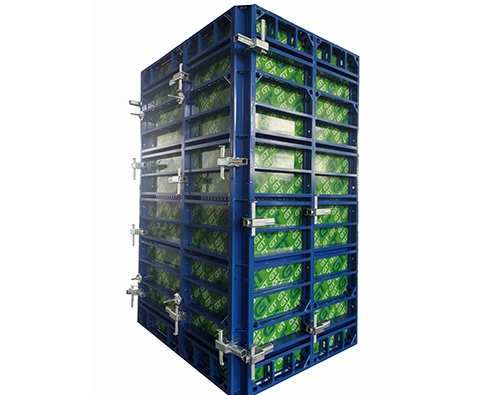
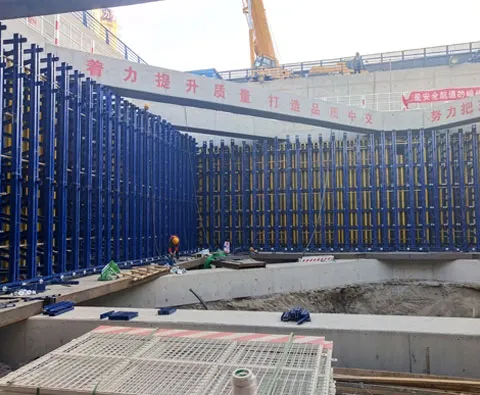
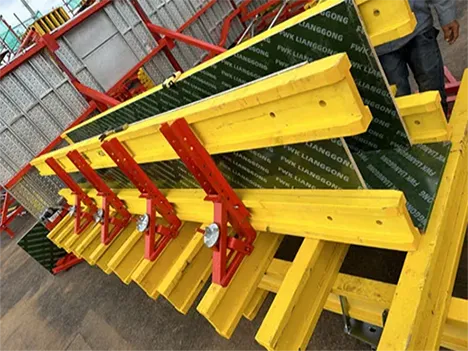
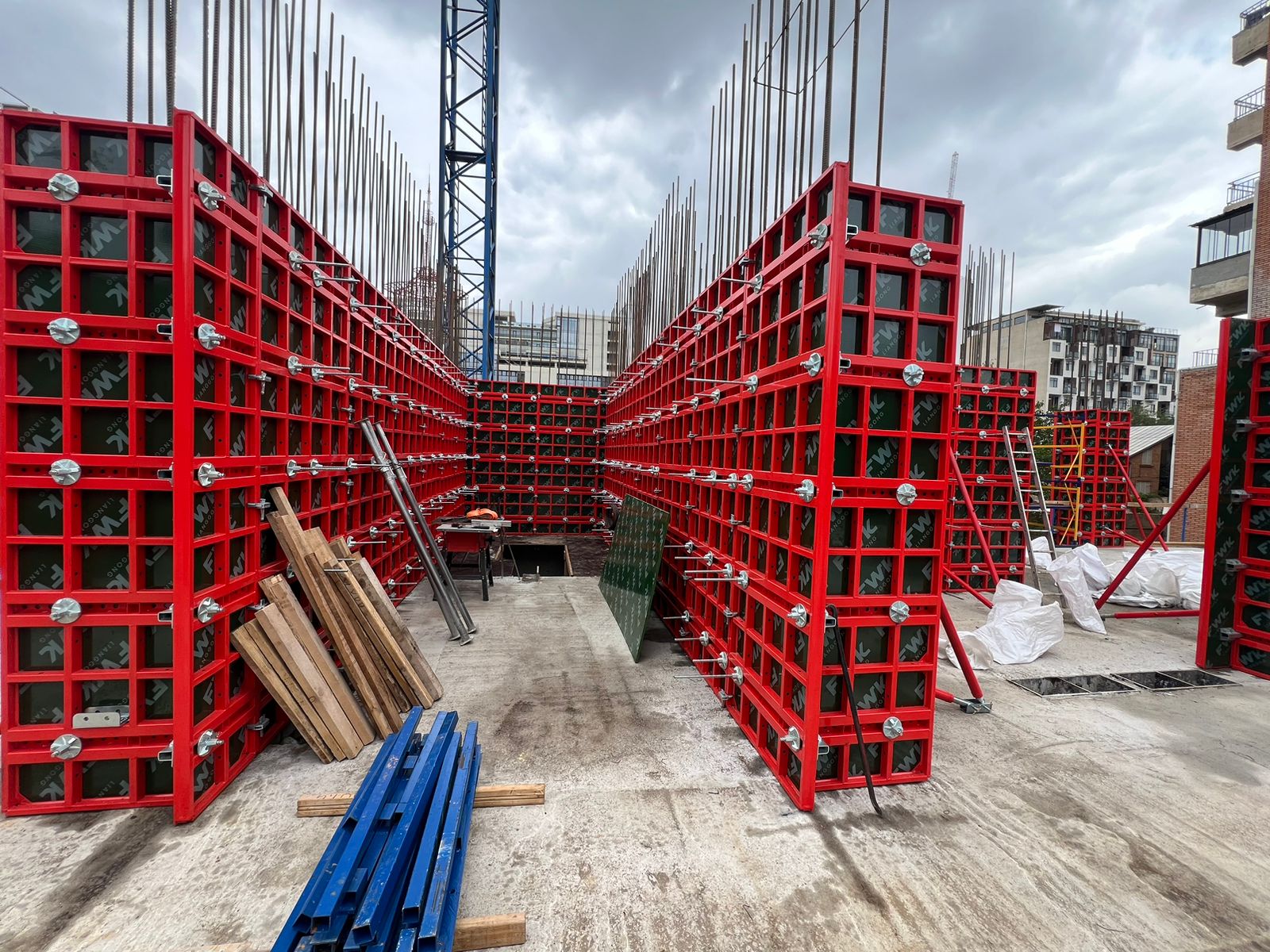
In the construction process of high-rise buildings, the formwork system plays a crucial role. Especially in the construction of key structures such as core cylinders, shear walls, frame structures, and lift shafts, the selection and installation of formwork directly affect the concrete forming quality, construction efficiency, and structural safety. High-rise formwork particularly needs to have characteristics such as high strength, climbability, high safety, and high reuse rate. The Lianggong Formwork hydraulic self-climbing formwork system is an advanced formwork technology developed to meet this demand and is widely used in super high-rise buildings around the world.
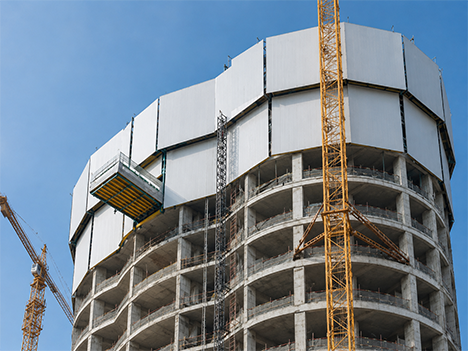
High-rise formwork generally uses a hydraulic self-climbing formwork system, with the main features including:
The formwork can be climbed as a whole or in units, with a high degree of automation;
Equipped with all-around working platforms, saving materials and labor;
High precision in formwork installation, facilitating error correction;
Short construction cycle per floor (usually completed within 5 days);
Complete safety protection facilities (such as protective nets and railings);
The formwork can be reused multiple times, reducing costs.
The Lianggong Formwork's hydraulic self-climbing formwork system drives the overall lifting of the formwork through its own hydraulic jacks, detaching from crane dependency, improving construction efficiency, and significantly reducing manual operation risks. It is suitable for application in high-rise building structures such as core cylinders, shear walls, frame columns, and lift shafts.
To ensure construction safety and concrete forming quality, the following key points should be strictly followed when using high-rise formwork, especially hydraulic auto-climbing formwork:
Preparation Work Before Formwork Installation
Cleaning and Repairing: Each section of the formwork must completely remove residual grout and dirt from the surface before installation, repair deformed parts, and uniformly apply mold release agents to ensure concrete forming quality.
Formwork Lap Direction: The formwork should be lapped along the pier or wall periphery in the same direction to avoid mismatched seams and misalignment affecting the pouring quality.
Precautions for Concrete Pouring
Controlling Formwork Top Surface Height: The upper surface of each concrete pour should be at least 5 cm higher than the top surface of the formwork to prevent formwork gaps or exposed reinforcement.
Vibration Requirements: A vibrating rod must be used for concrete compaction, avoiding collision with the formwork, through-bolt, reinforcement, and support system during vibration.
Removing Formwork Strength Control: Concrete strength should reach at least 2.5 MPa before removing the formwork to ensure the formwork system safely topples and prevent early-stage cracking of the structure.
Formwork System Operation and Monitoring
Structural Line Monitoring: During the climbing formwork construction process, the structure's centerline, verticality, and horizontal line should be regularly checked. Any deviation should be promptly adjusted and corrected.
Platform Load Control: The formwork system comes with work platforms, material receiving platforms, and baskets whose loads must be balanced and not overloaded. It is strictly forbidden for concrete buckets to collide with the climbing formwork system.
Concrete Curing and Post-formwork Removal Treatment
Curing Method: Concrete can be cured by watering; if the building height is too high and water supply is difficult, special concrete curing liquid can be used as a substitute.
Sealing Bolt Holes and Repairing Defects: After formwork removal, cement mortar should promptly be used to seal through-bolt holes and repair concrete surface defects to ensure the building's aesthetic quality.
In the complex construction environment of high-rise buildings, formwork construction is both a technical and meticulous task. The Lianggong Formwork hydraulic self-climbing formwork system is an efficient and safe formwork system that can greatly enhance construction quality and efficiency, reduce safety risks, and achieve the unification of green construction and high-quality building. In the future, with the continuous improvement of industrialization in construction, high-rise formwork systems will be continuously optimized towards more intelligent, modular, and environmentally friendly development.