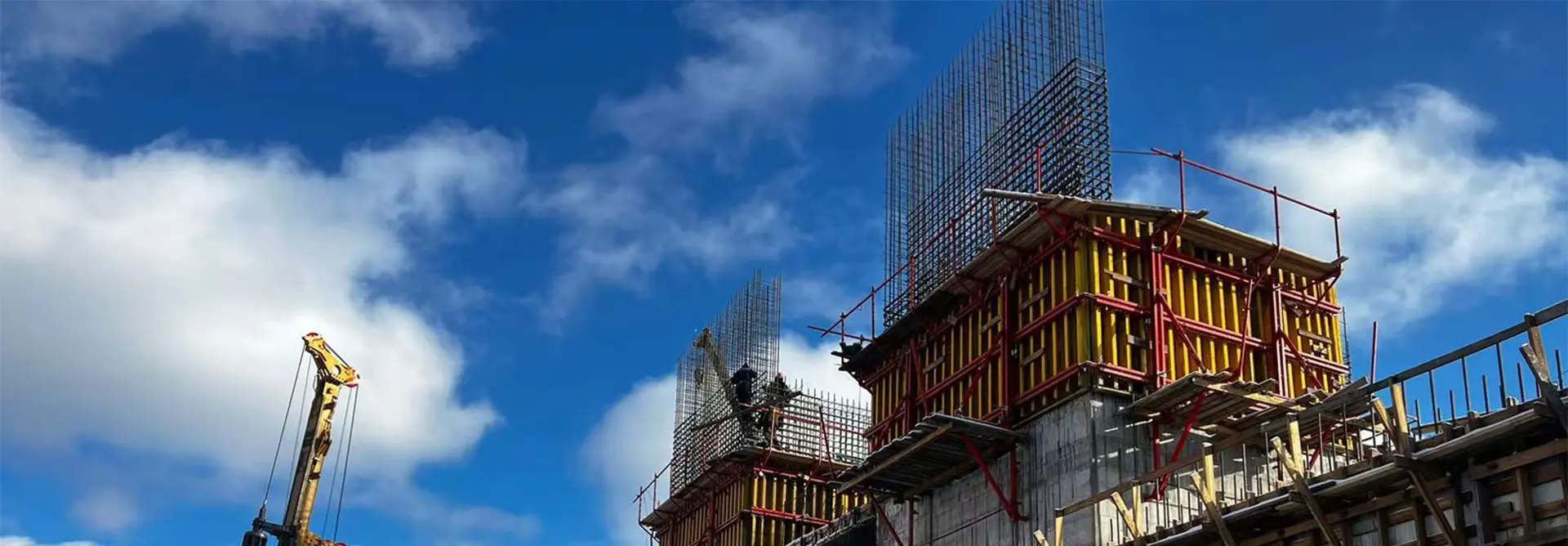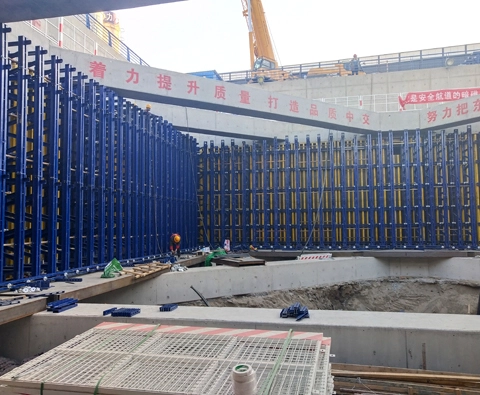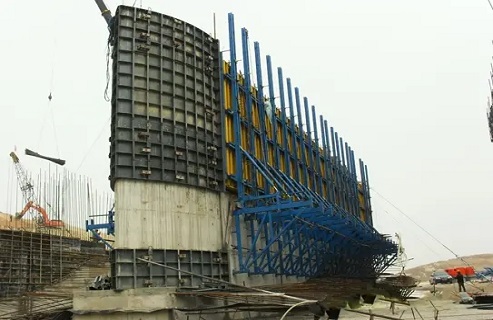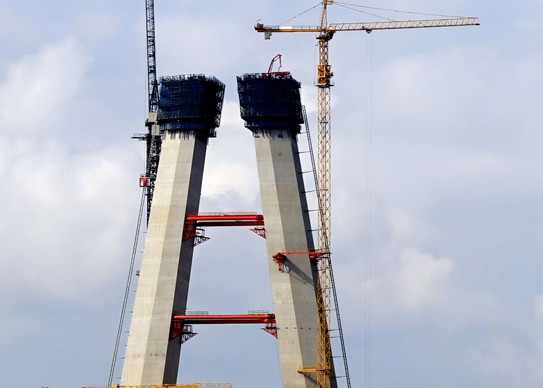
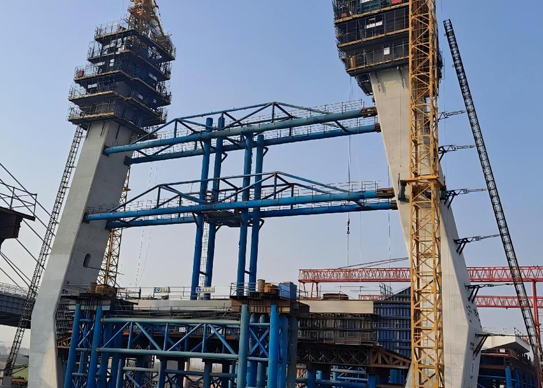
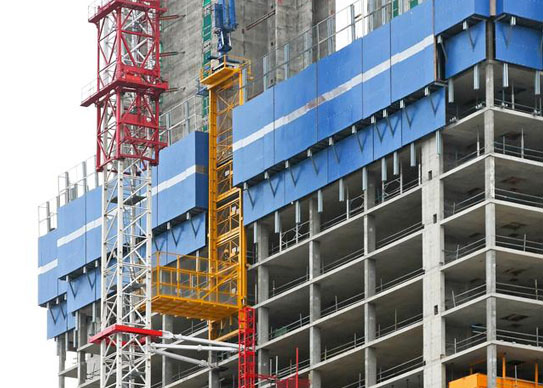
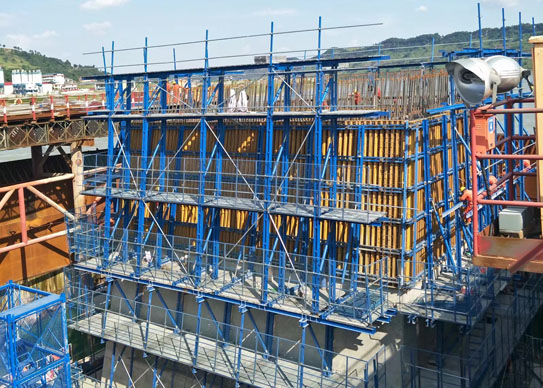
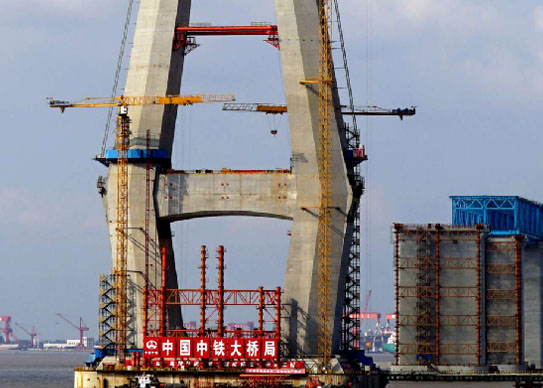
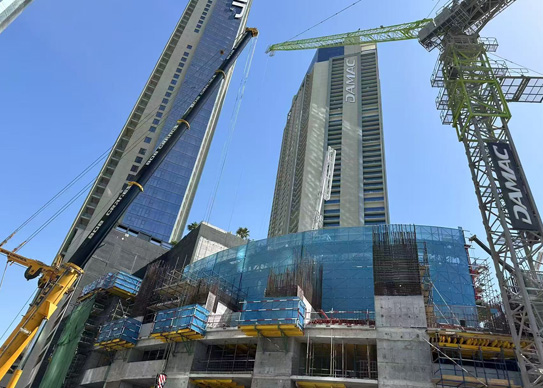
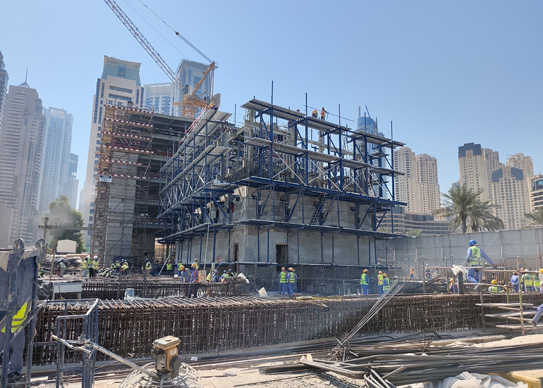
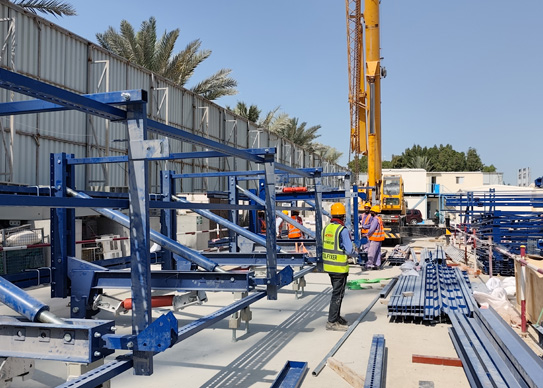
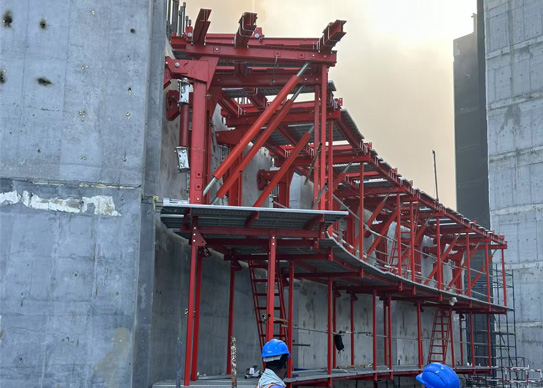
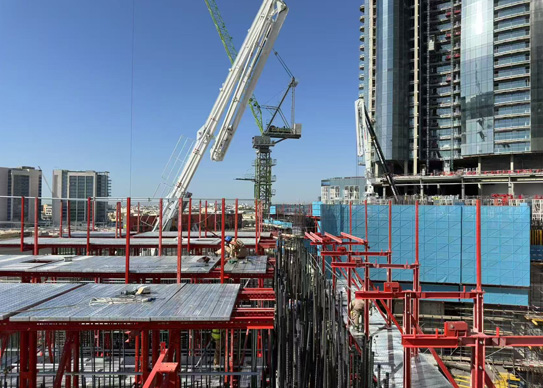
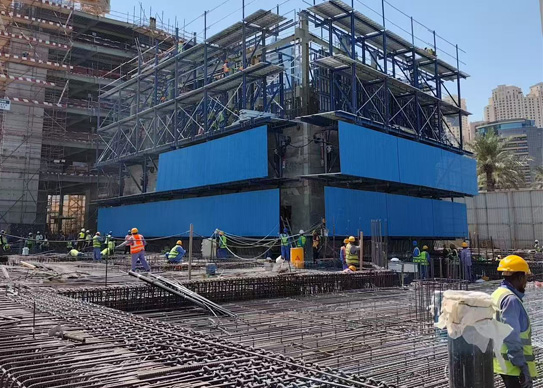
The Hydraulic Auto-Climbing Formwork System (HACS) functions as a self-ascending wall-mounted formwork system powered by its integrated hydraulic lifting mechanism. This system incorporates a hydraulic cylinder with upper and lower switching mechanisms to transfer lifting force between the main support frame and climbing track. Hydraulic actuation enables independent ascent of both the main support frame and climbing track, allowing the entire HACS to advance smoothly without cranes or additional lifting equipment.
Designed for operational simplicity, the HACS ensures rapid and secure climbing sequences. Its self-contained lifting system eliminates dependency on external devices, enhancing on-site safety and productivity. The combination of user-friendly design, operational efficiency, and comprehensive safety features establishes the Hydraulic Auto-Climbing Formwork System as the preferred solution for high-rise towers and bridges, delivering reliable innovation for modern construction projects.
| ltem | Diagonal brace type | Truss type | Separated truss type |
Pour height | ≤4.5m | 3-6m | 3-6m |
Suitable building height | ≤80m | ≤150m | Universal (Current max. construction height: 325m) |
Climbing speed | 4.5m/h | 6m/h | 6m/h |
Construction load | Top platform: ≤0.75 KN/sqm Other platform: ≤1 KNsqm | Top platform: ≤3 KN/sqm Other platform: ≤1 KNsqm | Top platform: ≤3 KN/sqm Other platform: ≤1 KNsqm |
Price | Low | Moderate | High |
Range of application | Straight-pier bridge Approach bridge with straight pier Small-scale shear wall | Straight-pier bridge Approach bridge with straight pier Conventional cable-stayed bridge Moderate-scale shear wall | Straight-pier bridge Cable-stayed bridge Large-scale core tube |
The auto-climbing formwork system performs climbing operations in complete set or individual modes, ensuring stable, synchronized, and secure ascent.
Brackets remain assembled throughout construction duration, optimizing site space utilization while preventing formwork damage, particularly to panel components.
All-round operating platforms eliminate the need for installing additional platforms, reducing material/labor costs and enhancing safety.
Minimal structural construction errors allow straightforward correction procedures, enabling progressive error elimination per floor.
High climbing velocity accelerates overall construction progress.
Self-climbing capability with in-situ cleaning/maintenance drastically reduces tower crane utilization.