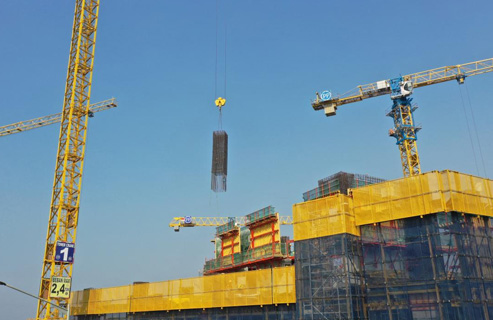
When purchasing steel shuttering for high-rise core tubes, infrastructure, residential, or industrial concrete projects, the choice of supplier directly affects: dimensional accuracy, turnover efficiency, safety, labor costs, and reuse times. This article will explain how to select quality steel shuttering suppliers, how to judge the key indicators of steel shuttering material, and why "engineering cooperation ability" is as important as the shuttering itself.
Lianggong specializes in the design and manufacturing of formwork and scaffolding systems and can provide customized steel shuttering solutions based on project drawings.
Steel shuttering is a reusable concrete forming system with a core structure made of steel plates and stiffening ribs, used for shaping and supporting before concrete reaches strength. Compared to wooden shuttering or low-grade solutions, steel shuttering is often used for:
High repetition casting (prefabricated housing/in-situ housing, tunnels, subways, etc.)
Structures requiring high dimensional accuracy
Fair-faced or high visual appeal (reducing plastering and repairs)
High turnover, long lifespan
More demanding site environments requiring stronger impact resistance
In actual engineering, steel shuttering usually forms a systematic construction process with table formwork, climbing formwork, tunnel formwork, and supporting scaffolding to ensure the rhythm of "casting—demolding—transport—repeat" remains stable.
The **steel shuttering material** of different suppliers varies greatly, and it is recommended to focus on:
Steel plate thickness and flatness: affects deformation, alignment, and final concrete appearance
Frame/stiffening rib design: determines load-bearing capacity and vibration, lateral pressure resistance
Welding quality and consistency: affects structural strength and long-term durability
Surface treatment (coating/anti-corrosion): reduces rust and improves demolding performance
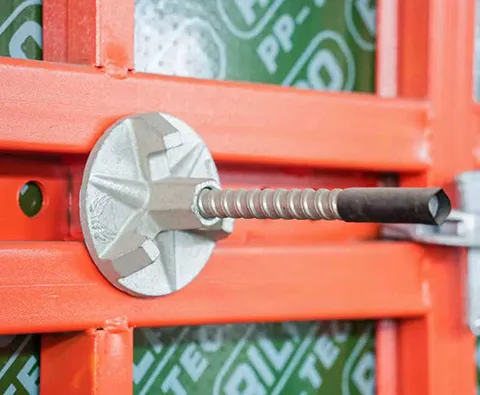
Precision of connectors and accessories: pins, wedges, tie rods, adjusters directly affect installation speed and accuracy
When evaluating materials, suppliers can be asked to provide conventional specifications, production tolerance control descriptions, and expected turnover performance under normal maintenance conditions.
When comparing steel shuttering suppliers, it is recommended to consider the following capabilities as "hard indicators":
Engineering support capability: detailed drawings, layout suggestions, stability and efficiency checks
Customization capability: non-standard sizes, openings, chamfers, corners, irregular structures, etc.
Production capacity and delivery control: whether complete set systems can be delivered as planned
Quality management processes: whether welding, size, coating inspection links are traceable
Packaging and logistics: export packaging, damage prevention solutions, clear coding labels to reduce site misinstallation and loss
For complex construction rhythm projects like core tubes, piers, tunnels, supplier engineering cooperation can often significantly reduce rework and improve turnover efficiency.
Lianggong produces various formwork and scaffolding systems, and for steel shuttering needs, can support:
Customized steel shuttering/steel shuttering systems: walls, columns, beams, and irregular structures
Steel frame formwork: modular, durable, easy to transport
Tunnel formwork for housing: high repetition, high-efficiency casting
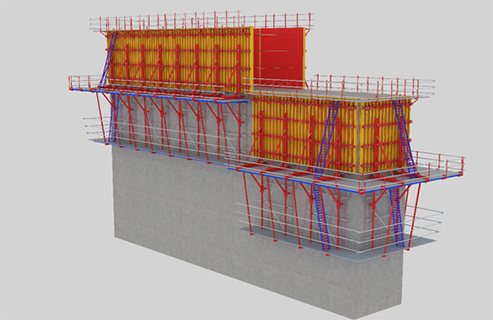
Hydraulic self-climbing formwork and cantilever climbing formwork: suitable for high-rise core tube and shear wall construction
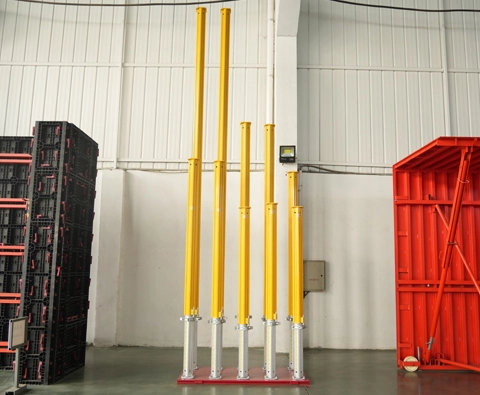
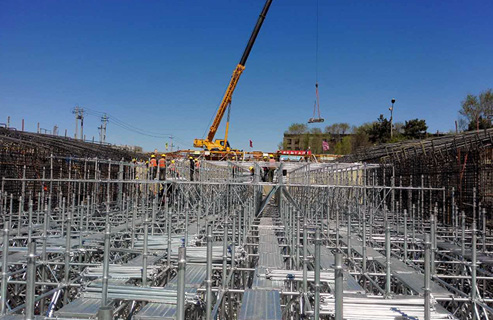
Supporting safety screens, unloading platforms, and ringlock scaffolding, forming a safe and continuous construction system
This "systematic" approach is crucial: steel shuttering can only truly achieve fast-paced, low-rework on-site performance when collaboratively designed with climbing, protection, turnover, and access solutions.
When sending an RFQ to steel shuttering suppliers, it is recommended to include the following information to facilitate the supplier in providing executable solutions:
Structural drawings (wall and column thickness, height, curve radius, opening positions, etc.)
Appearance and precision requirements (tolerance, seam control targets)
Turnover plan (demolding rhythm, casting frequency)
Lifting/transportation methods (manual, tower crane, table formwork transport, climbing)
Estimated quantities of various panels + accessory list (tie rods, clamps, corner molds, back braces, etc.)
Site environment (coastal corrosion, temperature difference, stacking conditions)
Destination port, packaging requirements, label language, fragile parts/spare parts needs
A quality solution usually not only includes the price but should also include configuration suggestions, accessory details, production and delivery plans, and be able to match your construction organization rhythm.
It is recommended to comprehensively compare material specifications, welding and flatness tolerances, accessory completeness, engineering support, delivery reliability, and project cases, rather than just looking at the panel unit price.
Steel plate flatness, seam precision, surface condition (coating and maintenance) are key to determining grout leakage control and appearance consistency.
For repeated structures or irregular structures, customized steel shuttering can usually reduce labor, improve installation efficiency, and increase precision, making it more cost-effective from a "comprehensive cost per casting" perspective.
Yes. Many projects combine steel shuttering with climbing formwork, safety screens, unloading platforms, and scaffolding to achieve a faster, safer construction rhythm.