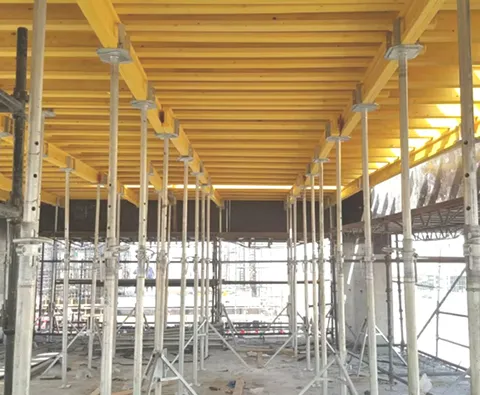
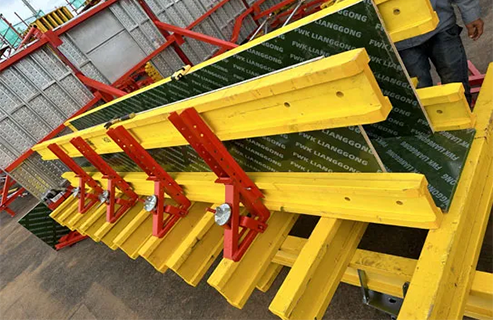
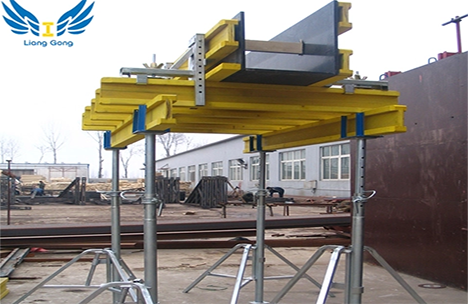
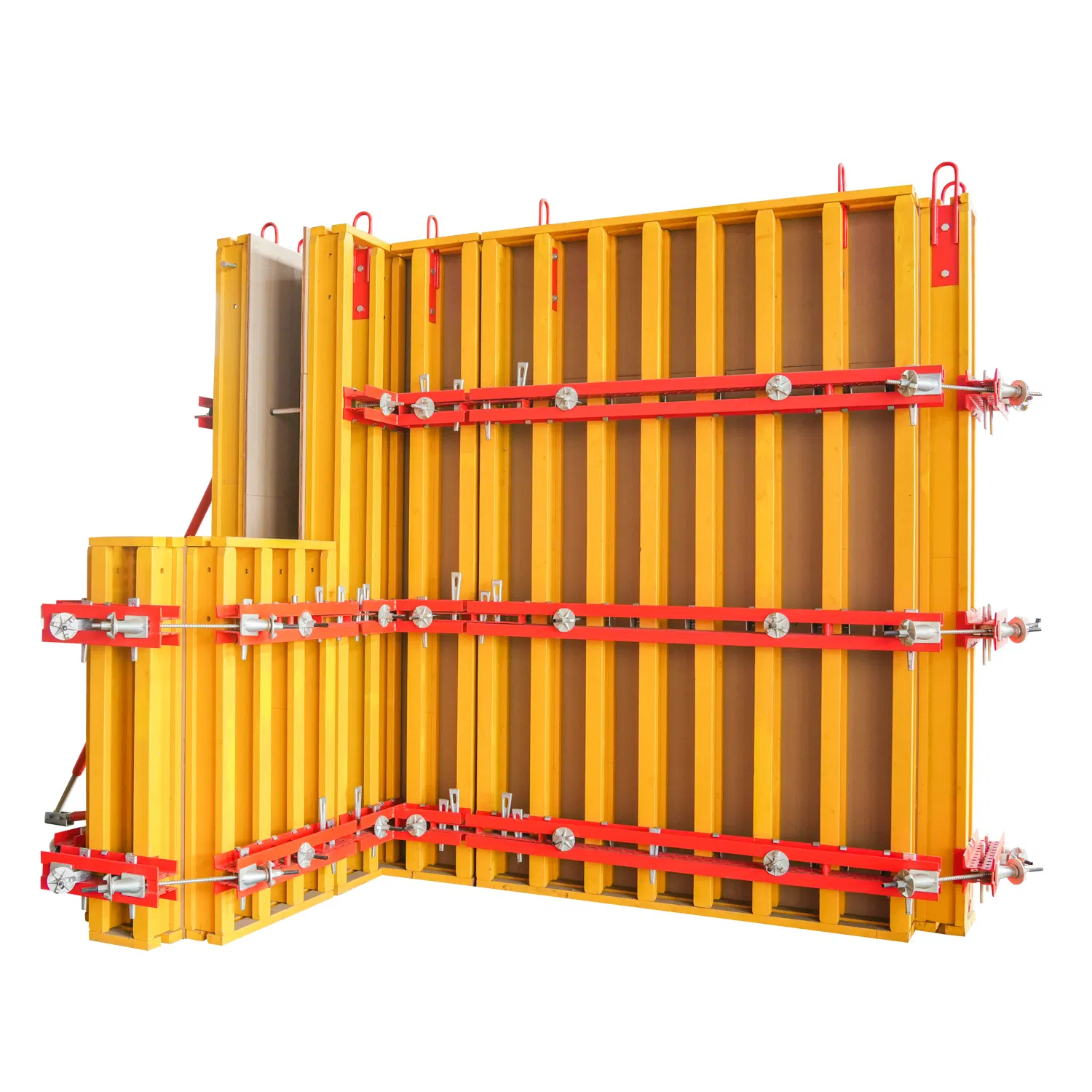
The tunnel formwork adopts a standardized and recyclable construction process, replacing the repeated on-site cutting and assembling of formwork in traditional methods, significantly saving labor costs. The wall and floor slabs can be completed in one go, achieving coordinated pouring. After a large steel formwork unit completes a construction segment, it can be entirely transferred to the next similar or similar working condition construction area without reassembling individual formwork and support systems.
Therefore, tunnel formwork construction is particularly suitable for projects with highly repetitive room layouts such as apartments, hotels, dormitories, affordable housing, and others, offering high cost-effectiveness. Lianggong's tunnel formwork system combines mechanized operation with reusable steel formwork components, making it the best choice for this type of repetitive building construction.
The main labor saving comes from reducing independent formwork construction processes.
In traditional construction methods, wall formwork and floor slab formwork usually need to be installed, adjusted, dismantled, and transported separately. Tunnel formwork integrates the formwork process for walls and floor slabs into a coordinated and unified system.
Thus, on-site workers can reduce time spent on the following tasks:
Cutting and assembling formwork materials
Installing wall formwork and floor slab formwork separately
Repeatedly measuring and correcting
Dismantling a large number of independent formwork components
Re-establishing formwork for the next room or floor
Repairing inconsistent concrete surfaces
Once workers become familiar with this system, the entire construction process gradually forms a repetitive and stable production cycle, rather than customized formwork construction each time.
Yes. This is one of the most representative advantages of tunnel formwork.
The system can complete the pouring of reinforced concrete walls and floor slabs within a coordinated construction process, forming an integral box-shaped or unitary structure. By merging construction processes that originally needed to be completed separately, contractors can reduce construction steps and improve overall construction process efficiency.
This advantage is especially evident when projects require the construction of dozens or even hundreds of similar residential units.
The construction team does not need to readjust the formwork construction method on each floor but can establish a repeatable standard process, including reinforcement construction, formwork positioning, concrete pouring, formwork dismantling, and formwork transfer, etc.
The tunnel formwork can exert its maximum economic advantage when the same set of formwork configuration can be repeatedly used.
During the initial installation, detailed construction planning, size control, and personnel training are required. But after that, workers can basically repeat the same operations from one unit or floor to the next unit or floor.
Therefore, as the project progresses, labor production efficiency usually gradually improves.
Comparative studies on tunnel formwork and aluminum formwork also show that although the initial investment in tunnel formwork is higher, its economy is often more prominent for larger-scale projects with more repetitions.
Therefore, compared to buildings with a large number of different room layouts, tunnel formwork is more suitable for highly standardized large housing development projects like those containing 500 housing units.
Yes, provided the project has a sufficient number of repeat construction cycles.
The initial investment in steel tunnel formwork is usually higher than basic traditional formwork, but when evaluating its cost, the first purchase price should not be the only consideration; the total turnover times throughout the project should be calculated.
Lianggong states that under proper operation and maintenance conditions, its tunnel formwork can be reused more than 200 times. Spreading the cost of the formwork system over a large number of pouring cycles can significantly improve the overall economy of repetitive building projects.
The higher durability of steel formwork can also reduce the need for frequent formwork replacements and temporary formwork component processing on the construction site.
The design concept of large tunnel formwork units is to operate and transfer in a complete system manner, rather than disassembling the formwork into a large number of small parts after each concrete pouring is completed.
Mechanized handling and organized hoisting operations can reduce the reliance on manual material handling. Lianggong's system can also be combined with automated concrete pouring equipment to achieve standardized construction operations.
The goal is not just to reduce the number of construction workers. More importantly, it is to enable existing workers to complete a larger amount of repetitive construction work through predictable and standardized construction processes.
This is especially important in markets where wages for skilled formwork workers are high or where recruitment is difficult.
Not applicable to all projects.
Tunnel formwork systems usually require higher upfront investment, but for highly repetitive engineering, the initial investment can be recovered through faster construction cycles, lower labor dependency, higher formwork turnover, and less on-site processing work. Current industry data also shows that although the initial cost of tunnel formwork is higher, its overall economy will be significantly improved in sufficiently large repetitive projects.
In the following cases, traditional formwork may still be more economical:
Small project scale
Frequent changes in floor layout
Few repetitions of formwork usage
Limited crane operation conditions
Highly irregular structural geometry
Therefore, the correct way to compare costs is not simply to compare formwork procurement prices but to compare the comprehensive cost per square meter of installed formwork or the comprehensive cost per pouring cycle.
Tunnel formwork is most suitable for building projects with a high degree of structural repetition, including:
High-rise apartment buildings
Affordable housing projects
Hotels
Dormitories
Standardized housing development projects
Highly repetitive industrial buildings
Lianggong mainly positions its tunnel formwork for residential, commercial, and industrial building projects, especially suitable for projects with more standardized layouts, tight schedule requirements, and where repetitive construction can bring significant value.
Choosing the right formwork system is only part of the decision-making process. Experienced steel formwork manufacturers should also evaluate the building layout to determine whether the project has sufficient repetition to determine whether the adoption of tunnel formwork solutions is economically reasonable.
Before requesting a quote, contractors should provide the following information:
Typical room and floor dimensions
Wall and floor slab thickness
Building height and number of floors
Number of repeating units
Concrete technical requirements
Crane capacity and hoisting conditions
Planned construction cycle requirements
Information on openings and special structural nodes
A reasonable formwork design scheme that can minimize the need for special-shaped formwork and unnecessary on-site modifications is crucial for maintaining a high level of manual work efficiency throughout the project.
Tunnel formwork mainly reduces labor costs through standardized repetitive operations, integrating wall and floor slab construction, reducing on-site formwork processing, improving formwork reuse rate, and supporting mechanized handling.
As the number of repetitive construction cycles increases, its economic advantages will be further enhanced. For large residential projects or other building projects with a high degree of standardization, the real advantage is not only faster formwork construction speed but also the ability to transform formwork construction into a predictable, standardized production cycle, thereby reducing the labor costs required for each completed unit.
Lianggong provides customizable tunnel formwork systems for repetitive concrete structure construction, enabling contractors to match and optimize formwork sizes and construction operation methods according to specific building layouts and construction schedule requirements.
Compared to traditional on-site formwork erection, tunnel formwork can significantly reduce labor demand in repetitive projects, as it does not require repeated re-erection of formwork and can also reduce a large amount of manual processing work.
Yes. One of the design purposes of the system is to complete wall and floor slab construction simultaneously in a coordinated concrete pouring operation.
Under correct operation and maintenance, Lianggong's tunnel formwork is designed for more than 200 turnover uses.
It is most economical for projects with a large number of repeating rooms or floors, such as apartments, hotels, dormitories, and large residential development projects.
The project's degree of repetition, crane and hoisting planning, workers' skill level, formwork design, concrete construction cycles, and on-site logistics organization will all affect the final labor cost savings.