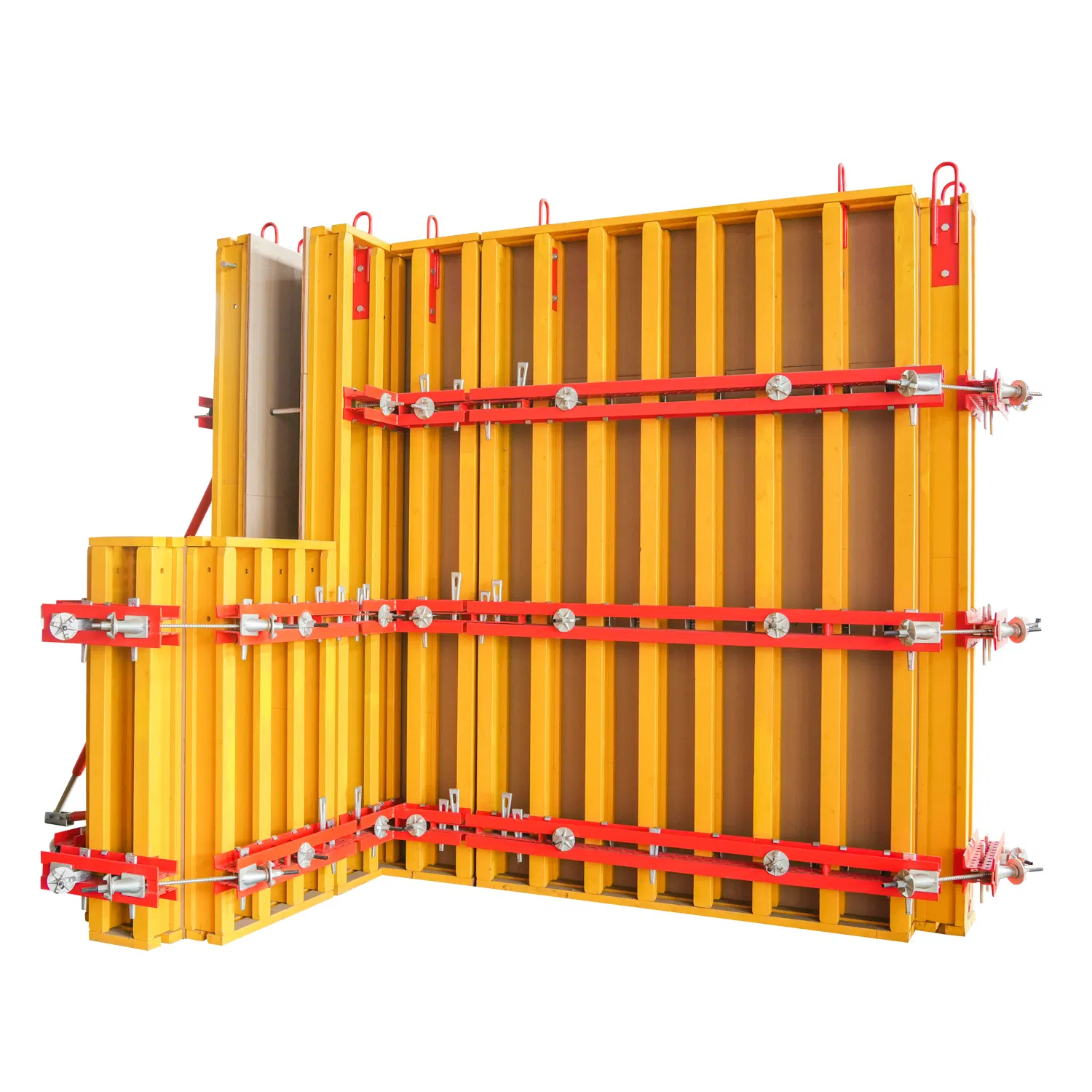
In today's fiercely competitive construction industry, especially in the construction of super-tall buildings, core tubes, bridge piers, and large vertical structures, choosing an efficient and safe formwork system is crucial to the success of the project. Traditional formwork requires frequent dismantling and a large amount of tower crane lifting, which not only increases labor costs and extends the construction period but also brings safety risks for high-altitude operations. The emergence of the hydraulic automatic climbing formwork system provides an efficient solution to these problems. It allows the formwork, working platform, and protection system to automatically climb up along with the construction progress, significantly improving construction efficiency and safety.
As a leading manufacturer of automatic climbing formwork in China, Lianggong Formwork focuses on developing advanced climbing formwork systems, including cantilever climbing formwork and hydraulic automatic climbing formwork. With rich experience in international projects like the Dubai SAFA 2 Residential Project and the Indonesia BNI Project, the company has helped numerous contractors significantly speed up vertical construction while maintaining high levels of safety and quality standards.
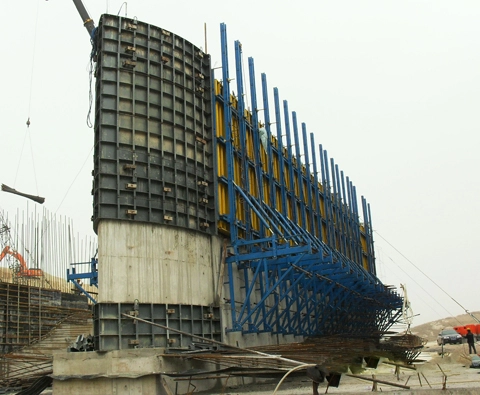
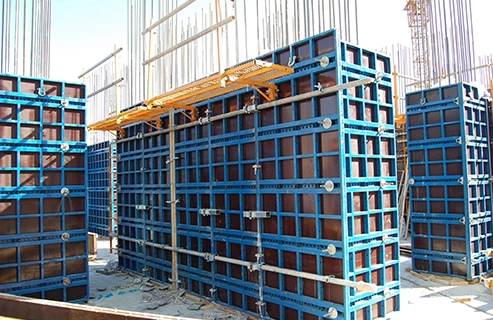
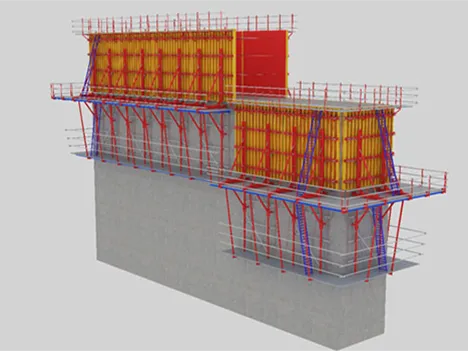
Climbing formwork, also known as self-climbing formwork, is a vertical formwork system designed specifically for high-rise concrete structures. It integrates formwork panels, working platforms, and safety protection devices into one, achieving overall or segmented upward climbing through embedded anchors, guide rails, and lifting mechanisms. Once installed at the bottom, the system can gradually move upward with the building height, greatly reducing the need for repetitive overall dismantling and frequent tower crane usage.
In construction, climbing formwork is mainly used for high-rise building core tubes, bridge piers, dams, retaining walls, and other tall vertical components.
Although climbing formwork and slipform both belong to self-climbing systems, there are significant differences in their working principles and applicable scenarios:
Slipform uses a continuous pouring method, where the formwork slowly and continuously moves upward during the concrete pouring process, forming a seamless smooth surface, suitable for structures such as chimneys, silos, and bridge towers. However, it requires 24-hour uninterrupted operation and has extremely high requirements for concrete mix control.
Climbing formwork adopts a segmented construction method. After each segment of concrete is poured and reaches sufficient strength, the formwork climbs as a whole or in sections to the next position. This method offers higher flexibility, easier interlayer quality control, and is more suitable for the core tube construction of high-rise buildings with regular floors.
In simple terms, slipform emphasizes continuous sliding to form an overall seamless structure, while climbing formwork focuses on segmented jumps, offering better flexibility in scheduling and joint handling. For most high-rise residential and commercial buildings, climbing formwork often achieves a better balance in speed, safety, and economy.
The power source for hydraulic self-climbing formwork is its built-in hydraulic climbing system, which includes hydraulic cylinders and upper and lower reversing boxes. The reversing box can control the lifting guide rail or lifting frame. Through the hydraulic system, the formwork frame and guide rail can form mutual climbing, allowing the hydraulic self-climbing formwork to steadily climb upward.
The climbing movement of the self-climbing formwork is achieved by alternately jacking the guide rail and climbing frame with hydraulic cylinders. The guide rail and climbing formwork frame are not related and can move relative to each other. When the climbing formwork frame is working, both the guide rail and climbing formwork frame are supported on embedded support bases, with no relative movement between them. After demolding, load bolts, hanging bases, and embedded support bases are immediately installed on the climbing cones left behind. Adjust the direction of the ratchet pawls of the upper and lower reversing boxes to lift the guide rail. Once the guide rail is lifted into place and positioned on the embedded support base, the operator immediately moves to the lower platform to remove the exposed embedded support base and climbing cone after the guide rail lifting, etc. After releasing all ties on the climbing formwork frame, the climbing formwork frame can start the jacking process. At this time, the guide rail remains stationary, the ratchet pawl direction is adjusted, and the cylinder is activated. The climbing formwork frame then moves relative to the guide rail. Through the alternate attachment of the guide rail and climbing formwork frame, they serve as the lifting objects for each other, allowing the climbing formwork frame to be lifted layer by layer along the climbing cones reserved on the wall.Climbing formwork has several core advantages:
Higher construction efficiency: Once installed, it can climb to the top, greatly reducing the number of tower crane lifts and dismantling, significantly shortening the overall construction period.
Stronger safety: Integrated enclosed working platforms, protective nets, toe boards, and intelligent synchronous control systems effectively reduce risks such as falls from heights.
Wider adaptability: Suitable for vertical, inclined, and curved structures, making it ideal for super-tall buildings and complex infrastructure projects.
Better concrete quality: Layered correction can reduce cumulative errors, achieving a smoother and more accurate concrete surface.
More cost-effective: Reduces formwork wear, auxiliary materials, and labor input, optimizes equipment utilization, especially suitable for repetitive core tube construction.
China, with its mature supply chain and competitive prices, has become a global center for advanced formwork technology. As a trusted manufacturer of automatic climbing formwork systems, Lianggong Formwork can provide a one-stop complete solution from technical consulting, custom design to production, and on-site support.
Lianggong's high-rise building system climbing formwork system has been successfully applied in several international projects, fully proving its reliable performance in complex environments. As a professional core tube climbing formwork supplier, Lianggong can provide flexible system solutions that can be flexibly combined with other types of formwork to meet the diverse needs of different projects.
Whether you need climbing formwork system export services or solutions for core tubes, bridge piers, or super-tall buildings, Lianggong can provide you with high-performance, cost-effective climbing formwork systems based on its rich engineering experience.
The automatic climbing formwork system is an intelligent, safe, and efficient solution in modern vertical concrete construction. It effectively overcomes the limitations of traditional formwork, helping contractors complete projects faster, safer, and with higher quality by reducing tower crane dependence through automatic or semi-automatic climbing and integrated safety platforms.
If your project involves super-tall buildings, bridge piers, or other vertical concrete structures, it is recommended to collaborate with an experienced climbing formwork supplier—Lianggong Formwork. You can call +86 18201051212 or contact us via email at sales01@lianggongform.com to obtain customized solutions, technical drawings, and competitive quotes.
Choosing Lianggong Automatic Climbing Formwork is an investment in faster construction progress, higher safety assurance, and better long-term cost-effectiveness. Let Lianggong's climbing formwork system help your project safely and efficiently reach new heights!